Binary ring watch Rev A at the fab
The least distracting watch you can wear.
Ultra minimal, ultra efficient. A custom micro-PCB and fifteen LED dots in a light resin ring, with a replaceable battery, open firmware and plenty of customizations.
Follow the build ↓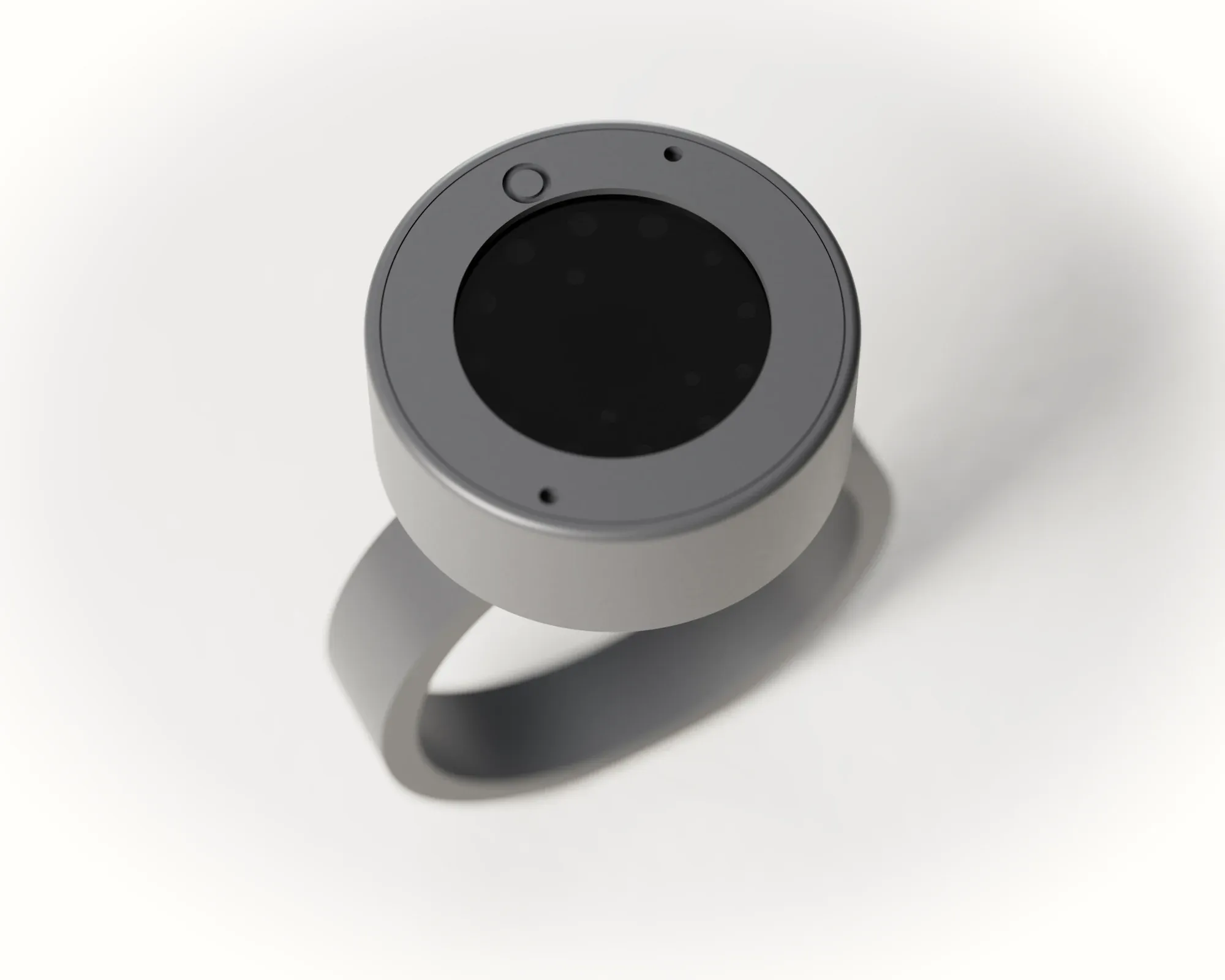
10:08 am
Where it's at
- Concept (done)
- Design (done)
- Boards ordered (now)
- Assembly (to come)
- Shipping (to come)
The idea
Most smart watches want your attention. Watchr goes the other way: a small resin case on a ring that stays dark until you tap it. Then a handful of dots show the time, and it goes dark again.
Reading it
The four red dots on the top arc are the hour, worth 8, 4, 2 and 1 from left to right. The six yellow dots on the bottom arc are the minutes, 32 down to 1. Add up what is lit. One more red dot means PM.
Tap again and the same dots show the date: the month on top, the day below. A third tap shows the battery. Hold for a second to set the time by hand, or for three and it listens for your phone.
What makes it
-
Distraction-free
Dark until you tap it. A quick look, then it gets out of your way. No notifications, no app, nothing asking for you.
-
Binary at a glance
Four red dots for the hour, six yellow for the minutes, one for PM. The hour dots are bigger too, so colour is never the only cue.
-
Replaceable battery
A standard CR1225 coin cell under a twist-lock lid. No charger, no cable, no battery that dies with the watch. When the cell runs low, one small dot blinks to say so.
-
Open firmware
Plain C on an ATtiny1616, with host tests, a simulator and a chip-level emulator that runs the real build before the board exists.
-
Sync from your phone
Hold the face to a web page that flashes the time. One of the watch's own LEDs reads it as a light sensor, and over successive syncs it learns how fast its crystal runs and corrects for it.
-
Make it yours
The case is a parametric model you can print and change, the ring twists off so it can be swapped, and the face's timings and options live in one config file. Prefer 24 hours? The PM dot becomes the 16s bit.
Specs
- Case
- 18 mm round, 7 mm tall, printed resin, twist-lock lid
- Display
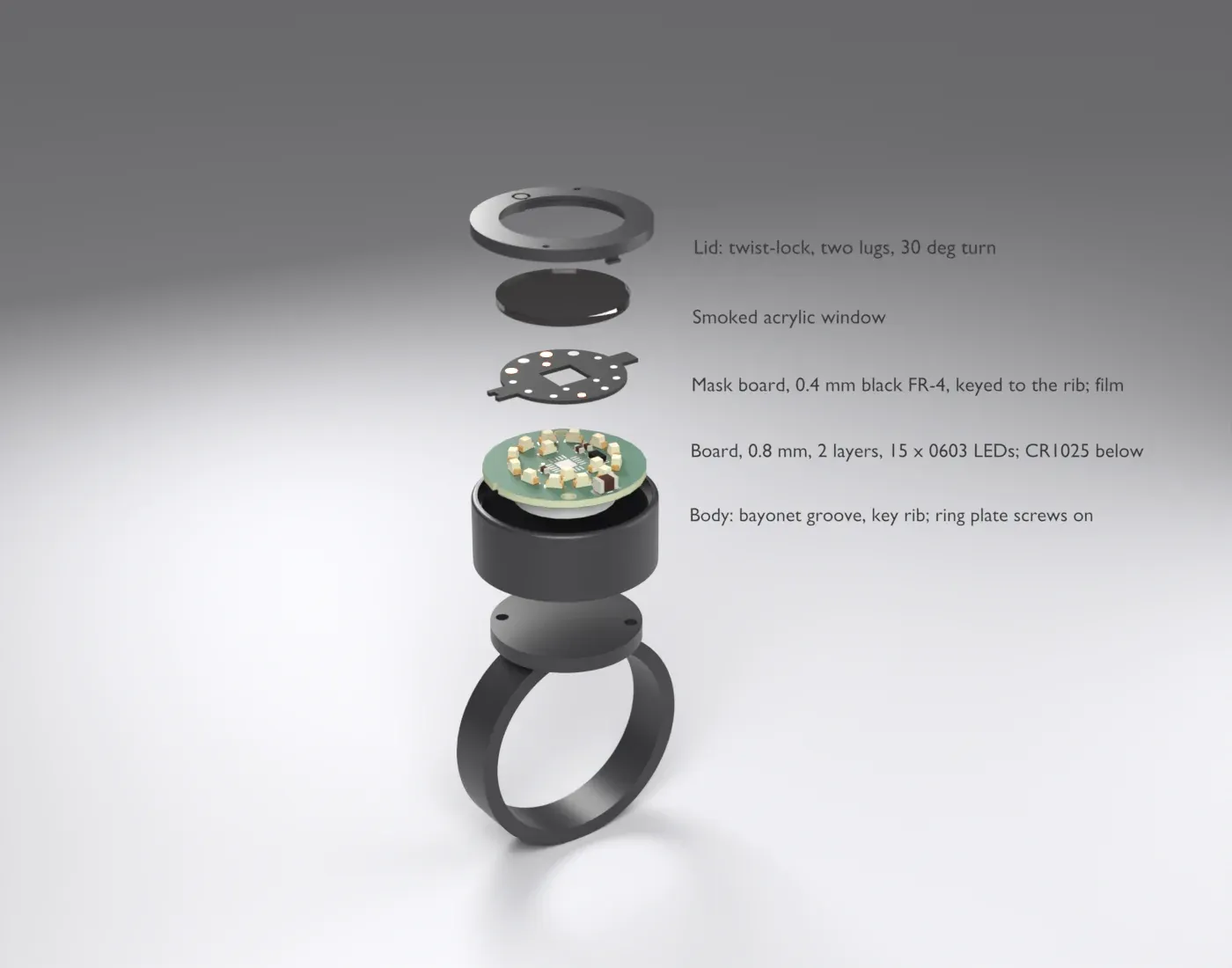
- 15 LEDs (0603), red and yellow, under a black PCB light-pipe mask and smoked acrylic
- Chip
- ATtiny1616 with a 32.768 kHz crystal
- Input
- Capacitive touch pad under the lid, so the case stays sealed
- Power
- CR1225 coin cell
- Board
- 2 layers, 0.8 mm, 15.7 mm round
- Firmware
- C, PlatformIO and megaTinyCore
Gallery
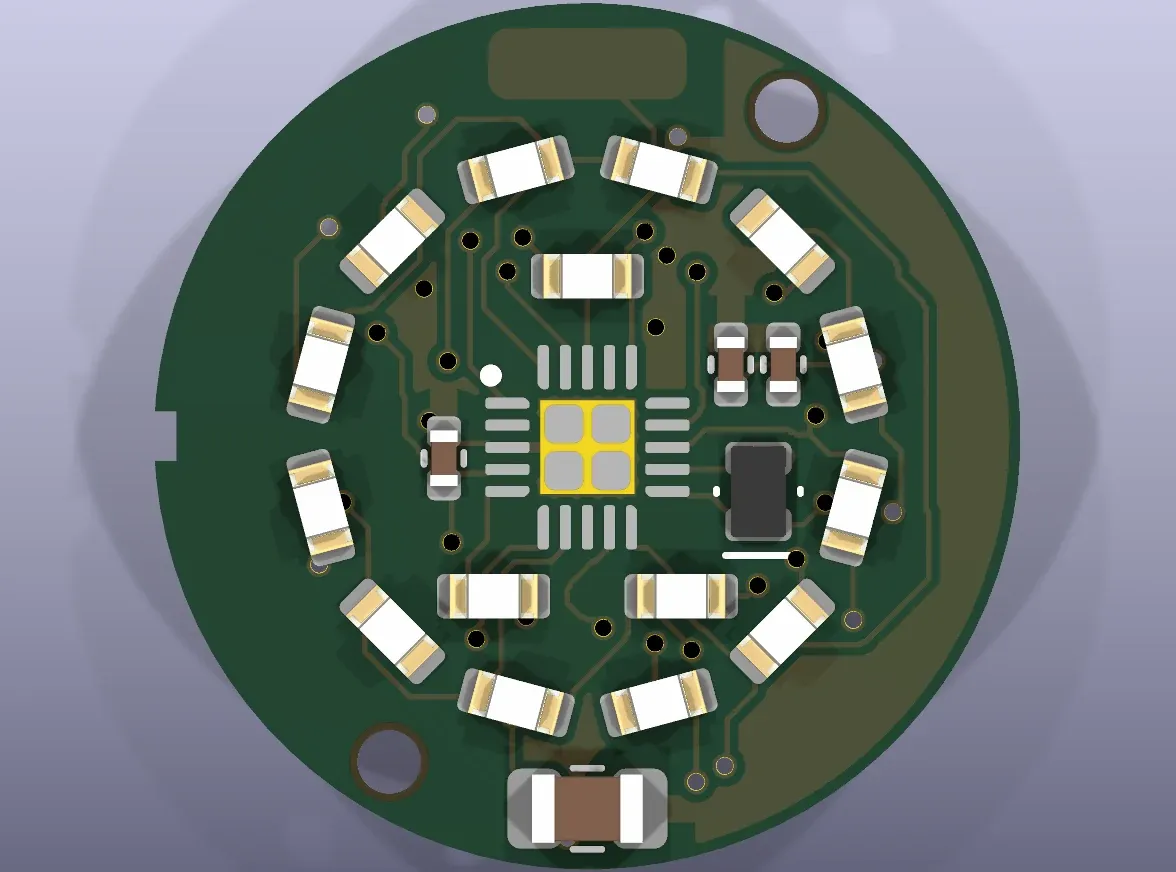
Rev A, top
Rev A, back
The mask board
Project Updates
-
Up next
The ring and the housing
While the boards are being made, the prototyping continues on the resin ring and the watch housing: how the case holds the board and the cell, and how it fastens to the ring. When the boards arrive, the first one goes together and onto a finger.
-
A bigger cell
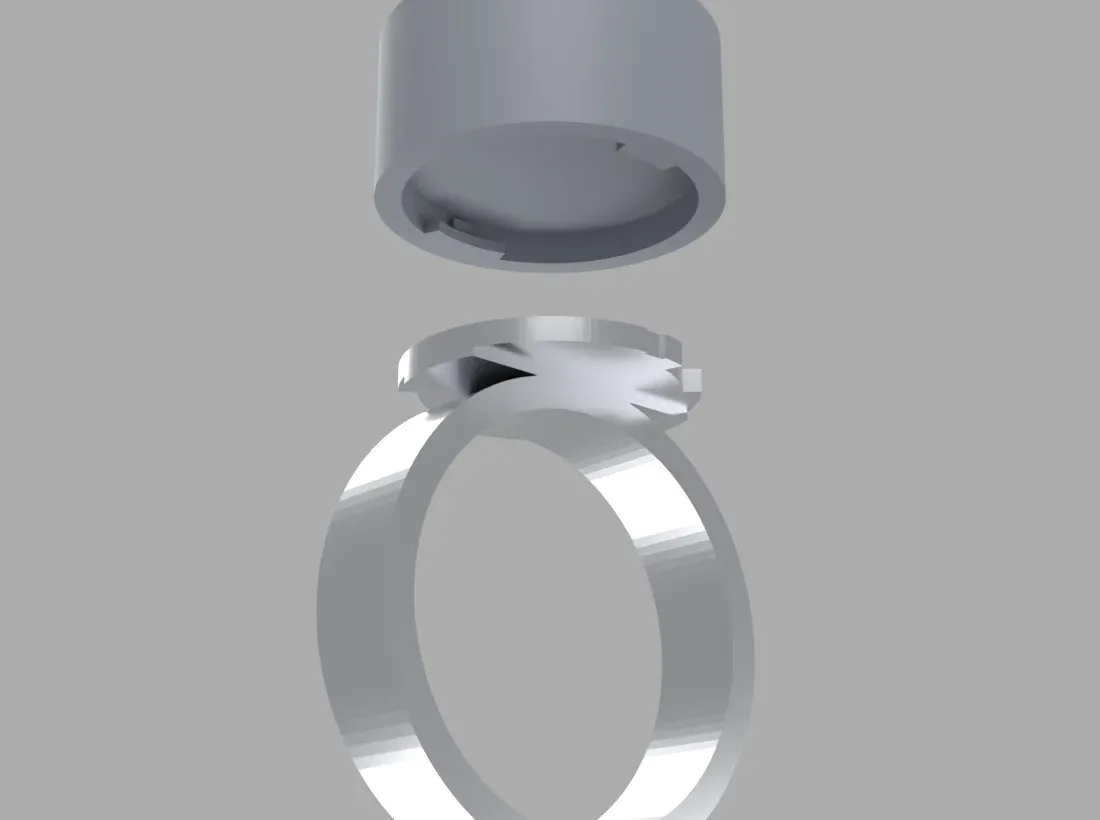
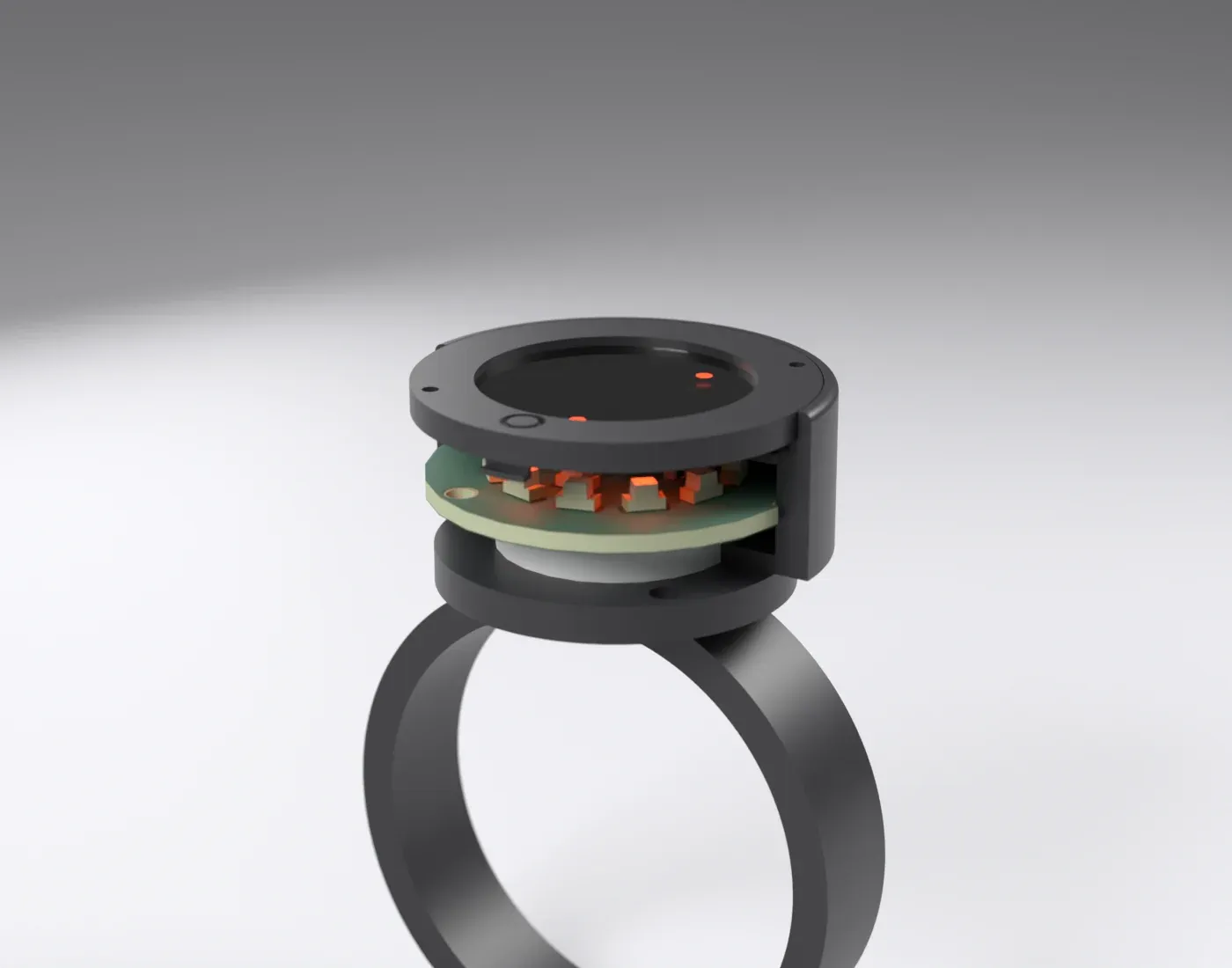
The board stays exactly as ordered; the case does the changing. A CR1225 is as thin as the CR1025 but holds about 60% more, and it fits the board. What it didn't fit was the case: the two screws holding the ring sat right where the bigger cell needs to go. So the ring now twists on instead, a bayonet with a small click at the end of the turn, and the bigger cell goes in.
The bigger cell under the board
The notched ring pad
-
Rev A ordered
Before it goes, a last pass with lessons from the Hack the North 2026 badge, a 1,750-board run at the same fab: a bigger battery tab pad, a pin-1 dot, and a "+" on the board and in the case so the cell can't go in upside down. Then the round binary board and its black mask board go to the fab as revision A. Every ordered board is frozen as a numbered release, so the next one gets a new letter rather than an overwrite.
-
Firmware before hardware
The real firmware runs on a chip-level ATtiny1616 emulator in a browser tab. It finds a touch wake-up bug before a single board exists. Phone sync, a battery view and a drift trim go in the same day.
-
Binary it is
The binary face wins. The case grows to 18 mm so the capacitor and the touch pad fit outside the window, and the round board carries fifteen single LEDs, hours red and minutes yellow, with the chip in the middle of the ring. Two layers, routed clean, built for the cheaper assembly line.
-
Dots instead of digits
What if the face were round, and the time were a few dots? Four concepts get rendered: a dial, rings, binary and hands. A simulator compares them at real size, calibrated against a bank card held to the screen. Red and green are ruled out, since red/green colour blindness is common, and the hours are always the bigger dots so colour is never the only cue.
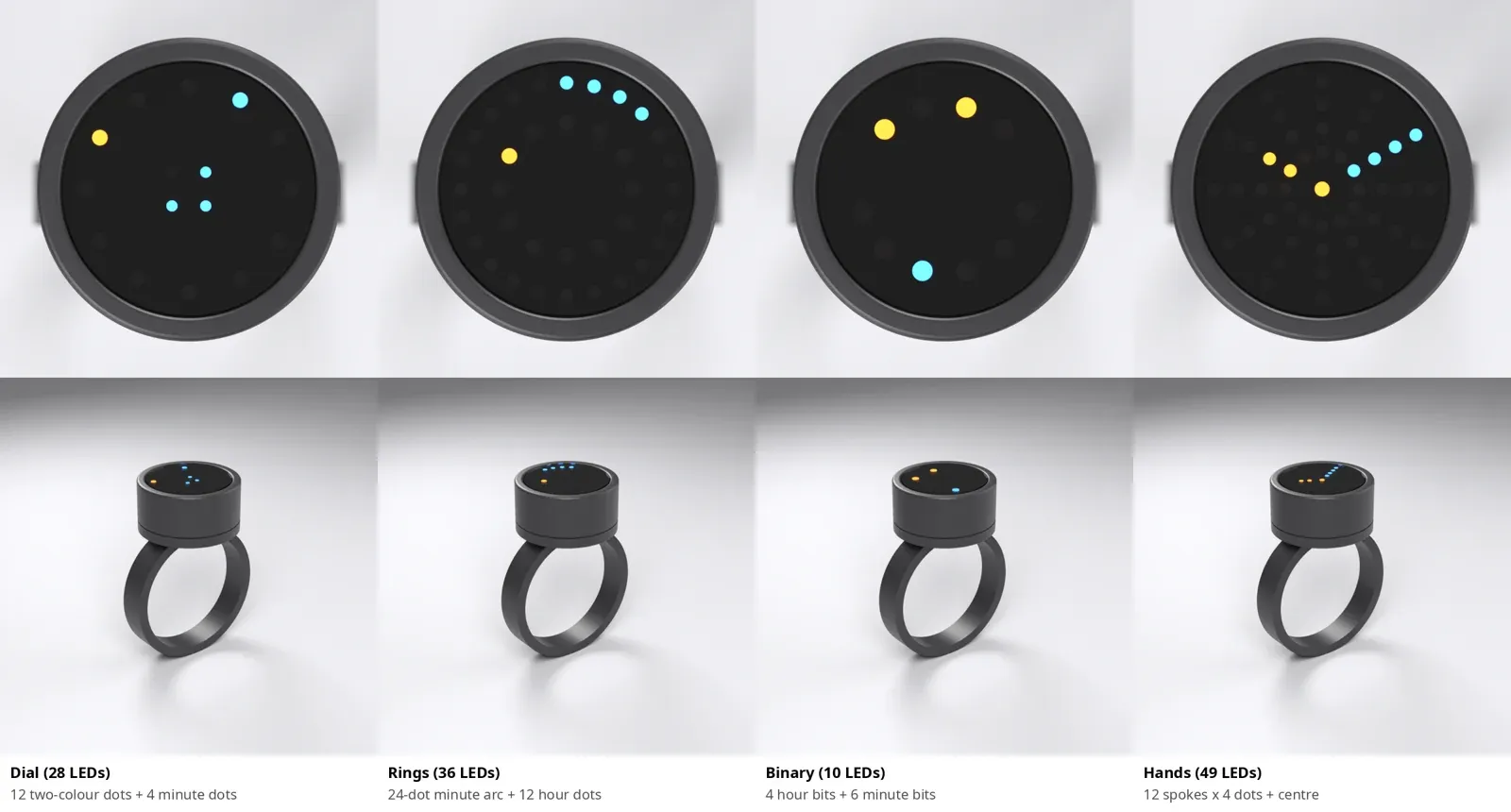
Dial
Rings
Binary
Hands
-
A simpler board
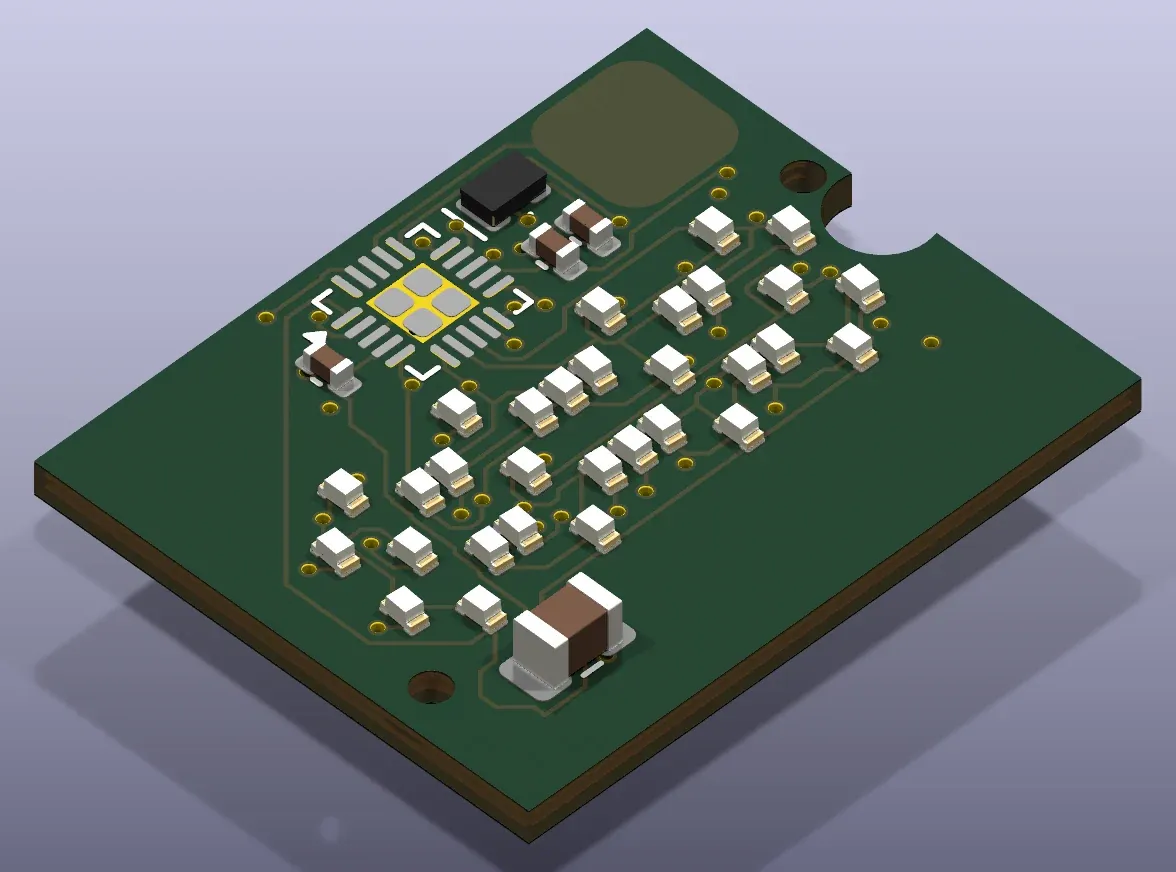
Ultra-small components turned out harder to source than anticipated and dramatically increased the estimated fab cost. It would also mean a more exotic board configuration which drives even bare PCBs well over expectations. Again, the board was redesigned around more common, reliably sourced parts.
-
LEDs instead of an LCD
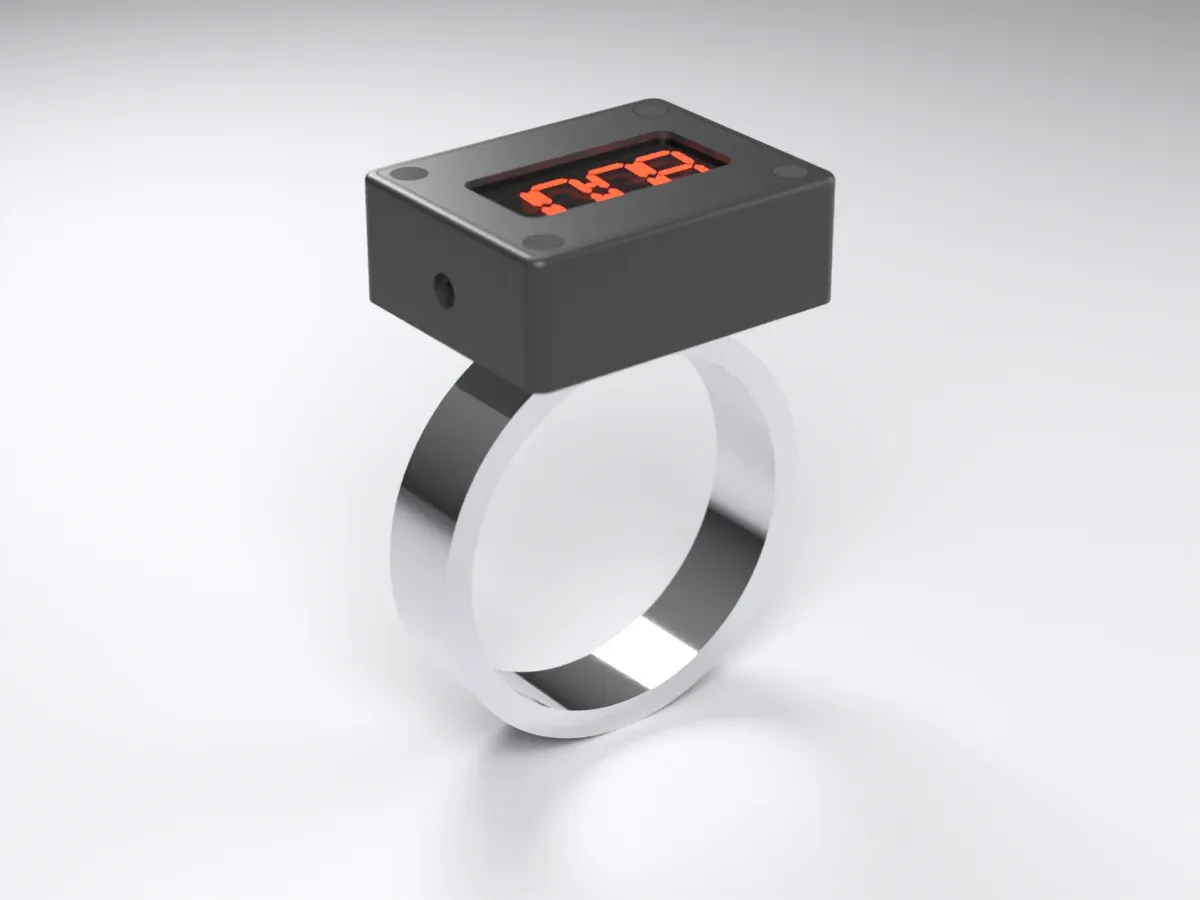
After much research, it turned out no LCD that small exists off the shelf, and custom glass needs its own tooling and would complicate the build even more. Instead, we've povited to thirty tiny red LEDs behind a light-pipe mask, read through smoked acrylic, driven one at a time straight from the chip. Essentially a custom 7 segment display built into the pcb. We also swap in a touch pad under the lid to replace a button, so the case can be sealed, and removes an additional part from the build.
-
From render to the physical world
Renders help in visualising ideas but a 3d print really helps contextualize proportions and scale.
-
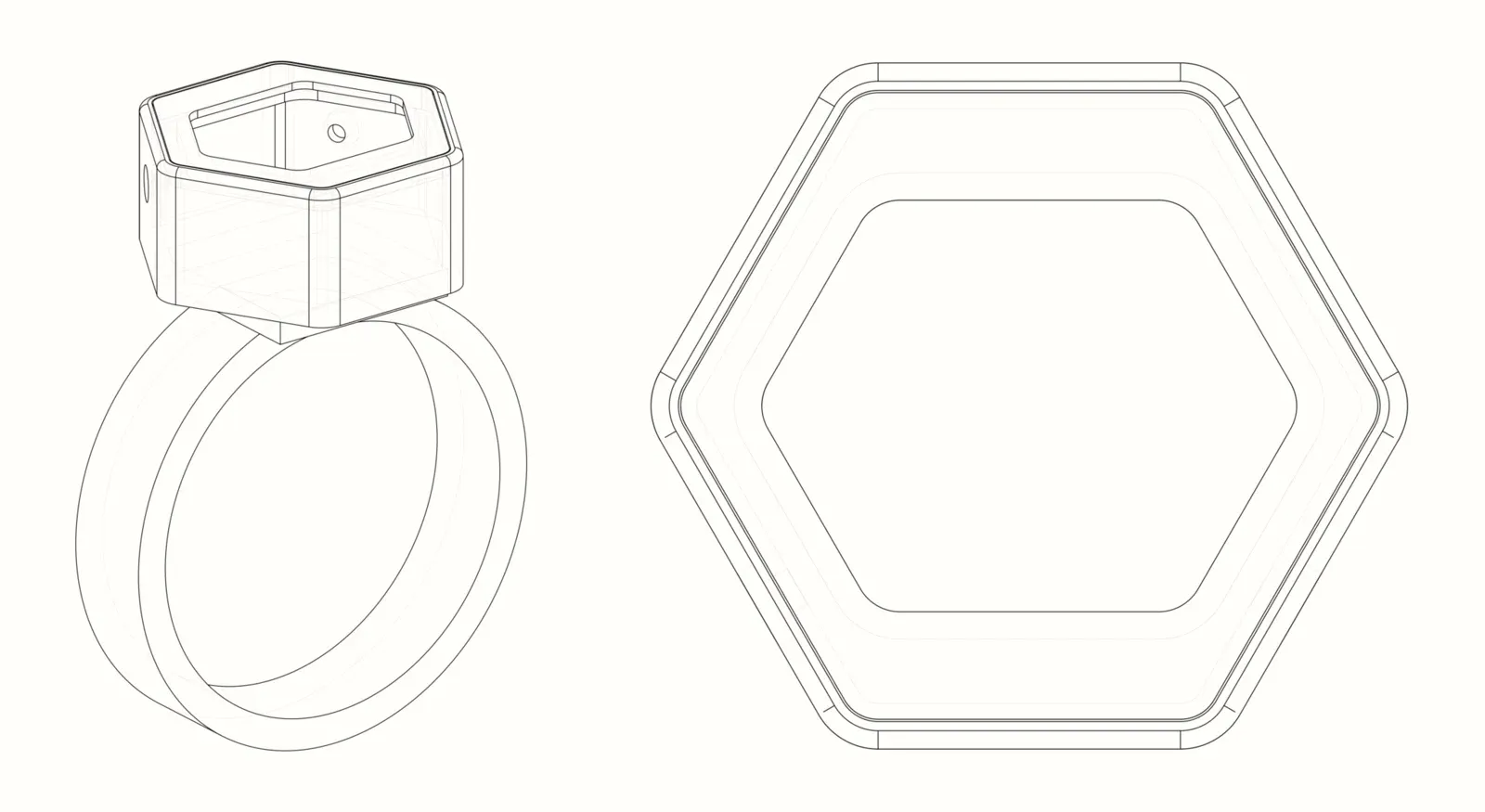
Hexagon seemed like a good idea
Next to the rectangle sat a hexagon, a little smaller at 17 by 15 mm and built around a chip-scale package. Both were drawn up, but ultimately the rectangle won as the hexagon wasted too much space.
-
First renders
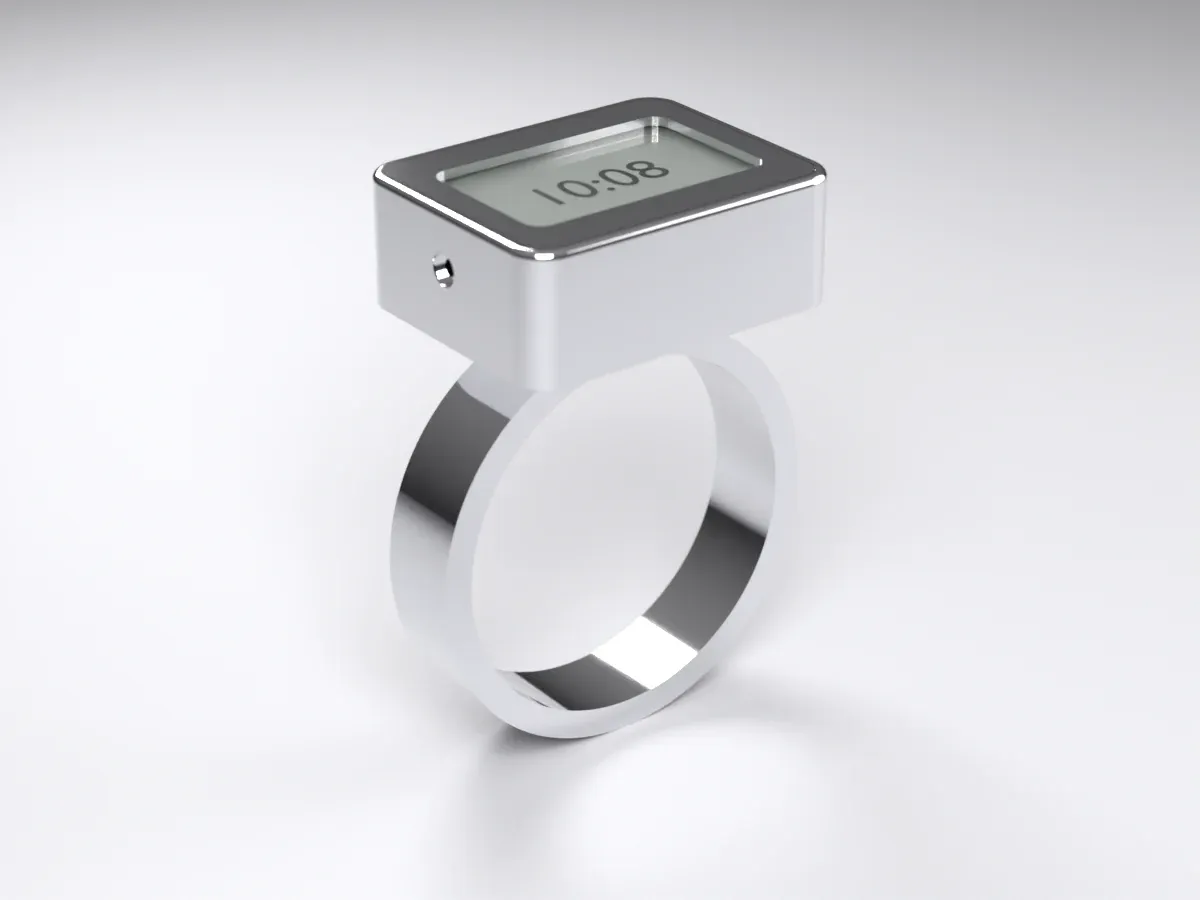
The sketches become models. Initial renders are constructed and the first ideas really materialize: a small case on a ring, a window, and a face that tells the time. The display is still open, with OLED, LCD and e-ink all compared. E-ink is the first to go, since the watch should stay simple and small; a segment LCD takes the lead, with a tiny OLED as the fallback.
Gold
Titanium
Black ceramic
Printed resin
-
On paper first
The idea had been around for months: the old Casio ring watch, and a watch that asks for nothing. Before any code, pen and paper. Sketches of cases and faces, what it should do, what it should never do, and how much can sit on a finger before it gets in the way.